A carved wooden figure from the Yoruba people of Nigeria is a significant representation of the rich artistic and cultural traditions of the Yoruba, one of the largest ethnic groups in Nigeria.
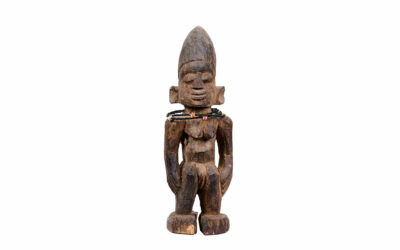
Carved Wooden Figure
read more
| info@mongoosealley.com | South Africa & Nigeria

A carved wooden figure from the Yoruba people of Nigeria is a significant representation of the rich artistic and cultural traditions of the Yoruba, one of the largest ethnic groups in Nigeria.
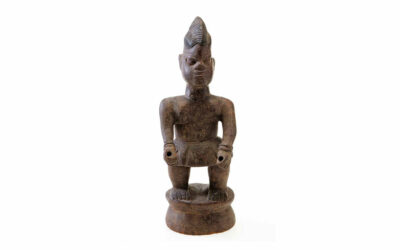
A carved wooden figure from the Yoruba people of Nigeria is a significant representation of the rich artistic and cultural traditions of the Yoruba, one of the largest ethnic groups in Nigeria.
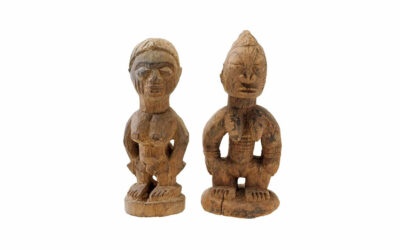
The Yoruba Ibeji pair holds significant cultural importance within Yoruba culture, particularly in Nigeria. “Ibeji” translates to “twins” in Yoruba, reflecting the high frequency of twin births in Yoruba communities and the unique traditions associated with twins.

The Yoruba people, one of the largest ethnic groups in Nigeria, have a rich cultural heritage known for its art, music, and religious practices. Wooden fertility statues play a significant role in their traditions and beliefs, symbolizing the desire for fertility, successful childbirth, and the nurturing power of women.

The term “reliquary” is generally associated with Christianity and refers to a container or shrine that holds sacred relics, typically the remains of saints or objects associated with them. However, the use of reliquaries to house sacred or significant objects is not exclusive to Christianity and can be found in various cultures around the world.
Susanne Wenger, popularly known by her Yoruba name, Adunni Olorisha, is a significant figure in the history of Nigerian art and culture. Her unique contributions to the Yoruba culture and her work in reviving and preserving the sacred Osun Grove in Osogbo, Nigeria, are central to her legacy.
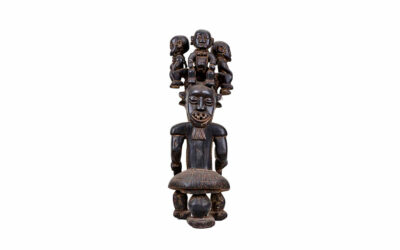
The Yoruba people are one of the largest ethnic groups in Nigeria, with a rich cultural and religious heritage. Shango, also spelled Sango, is one of the most significant deities (orishas) in the Yoruba religion, representing thunder and lightning.
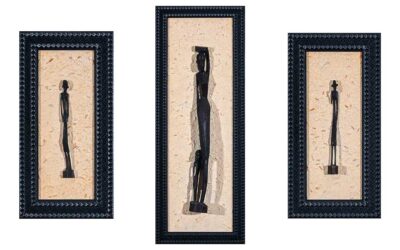
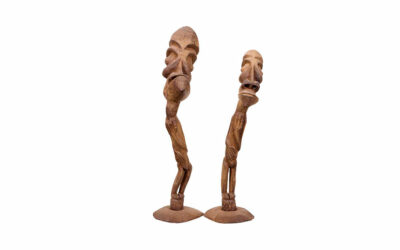
Stick figurines are typically small sculptures or carvings that resemble elongated human or animal forms. In Zanzibar, these figurines often reflect local culture and traditional craftsmanship. The design is simplistic yet artistic, capturing the essence of life in Zanzibar and surrounding regions. They can be made from various materials, including wood, metal, or bone.
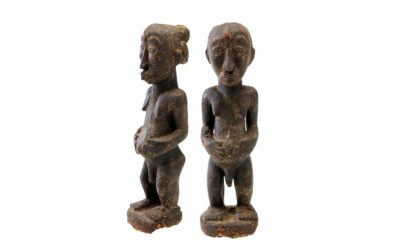
The Kingdom of Benin, also known as the Edo Kingdom or the Benin Empire, has a rich history that spans centuries. Established around the 11th century AD, this powerful West African kingdom evolved into one of the most advanced and influential states along the coastal hinterland of West Africa.

The Yoruba people of Nigeria have a rich and complex history that stretches back to the 1st millennium BCE. They emerged from the earlier Mesolithic Volta-Niger populations, forming a distinct cultural group with deep roots in the region.

The Yoruba woman is depicted in a traditional pose, elegantly balancing an earthenware container on her head. This imagery reflects the cultural practices and artistic heritage of the Yoruba people, one of Nigeria’s largest ethnic groups.
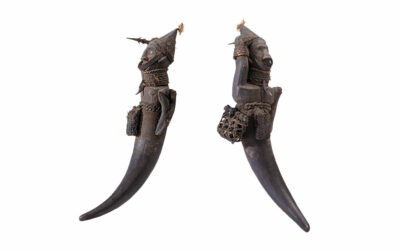
The Ife-Oba Wars were a series of conflicts that took place in the mid-19th century, from 1844 to 1847, between the Ife and Oba tribes in what is now Nigeria. This war was significant in the history of the Yoruba people, as it not only marked a struggle for territorial control but also for cultural dominance within the region.